
For a long time, curtains were seen purely as a functional element: something to cover windows, filter light, and ensure privacy. However, according to a recent article by House Digest, that perception is becoming outdated.
+ 5 details that professional organizers can spot in seconds to identify a messy bedroom
In 2026, curtains take on a much more expressive role in interior design, especially in bedrooms, where they become true focal points of the space.
According to House Digest, the new trend proposes using curtains as an aesthetic and architectural feature, capable of creating visual impact, adding texture, softening spaces, and even dividing areas. Limiting curtains to windows alone no longer makes sense within current trends, which value creative, versatile, and welcoming solutions.
This shift reflects a growing desire for more immersive and personalized bedrooms, where every detail contributes to the overall atmosphere. As House Digest highlights, curtains are now seen as an extension of the decorative project, going beyond their traditional function.
While designer Rebecca Hughes commented on this trend in an interview with Homes & Gardens, House Digest reinforces the same movement by noting that curtains are being used as room dividers, frames for relaxation corners, and even as alternatives to accent walls. The result is a more intimate bedroom, with a carefully balanced sense of comfort and theatricality.
Curtains beyond windows: a new way to decorate
According to House Digest, there are countless creative ways to incorporate curtains into the bedroom. They can be installed on open walls, entryways, or even in place of a private bathroom door, creating softer transitions between spaces. They are also often used to define functional areas, such as a reading nook or a small home office within the bedroom.
This solution is especially effective in rooms with darker color palettes. As House Digest points out, light fabrics placed strategically — around the bed or in passage areas — help balance the look, preventing the space from feeling too closed in or heavy.
The “curtain wall” trend
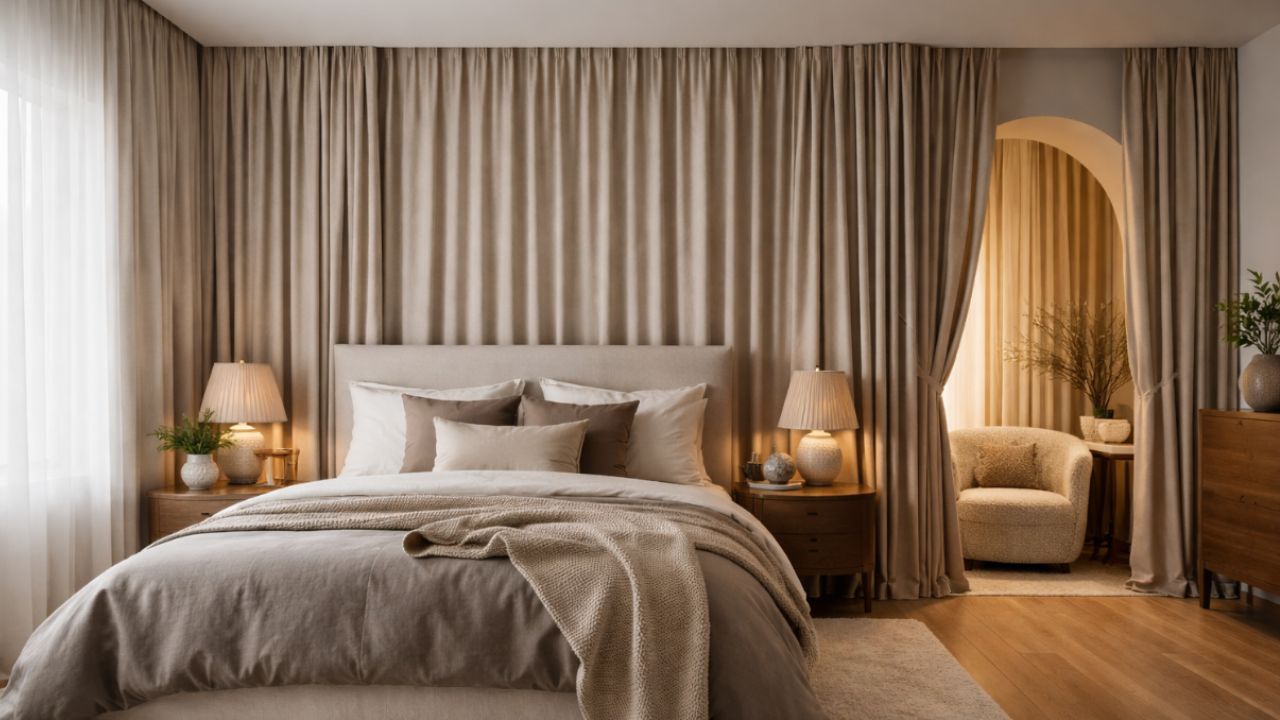
One of the boldest ideas highlighted by House Digest for 2026 is turning curtains into true decorative walls. Instead of a traditional accent wall, the curtain covers an entire section of the bedroom, adding depth, texture, and movement to the space.
Beyond aesthetic appeal, House Digest highlights practical benefits: curtains installed on thinner walls help dampen sound, provide light thermal insulation, and can conceal less attractive elements such as electrical panels or exposed outlets. Another positive point is versatility — this trend works for both homeowners and renters, as it does not require major renovations.
Another very popular approach, according to House Digest, is using curtains behind the bed, functioning as a decorative headboard even without windows. Extending the fabric up to the ceiling creates a modern canopy effect, while looser draping adds personality and sophistication to the bedroom.
How to choose colors and materials to get the trend right
The final atmosphere of the space depends directly on choices of colors, fabrics, and textures. House Digest explains that for more relaxing bedrooms, soft tones such as beige, light brown, and gray are ideal. Those seeking a cozier feel can opt for rich browns, terracotta, and honey beige.
Delicate shades of pink — such as dusty rose or champagne — create a romantic feel, while dark greens and deep blues reinforce a cozy and sophisticated mood, perfectly aligned with the 2026 trends highlighted by House Digest.
When it comes to materials, velvet and brushed cotton stand out as favorites. In addition to conveying visual comfort, they help darken the room, provide thermal and acoustic insulation, and create a sense of affordable luxury — a point House Digest emphasizes by highlighting velvet’s excellent value for money.
Linen, on the other hand, is ideal for those seeking a lighter and more relaxed atmosphere, while pleated curtains bring a more classic and refined look. House Digest also advises caution with patterns: subtle designs work best in bedrooms, especially when combined with patterned bedspreads and rugs, creating balanced visual layers.
To avoid mistakes, House Digest’s final recommendation is simple and practical: treat the curtain like paint. Take a fabric sample, hang it in the desired spot, and observe how it behaves at different times of day. Natural light can completely transform the perception of color and texture — and this test ensures a safer and more harmonious result.
Source: House Digest. This content was created with the help of AI and reviewed by the editorial team.
